Jesper Tjäder: Freeski creation, competing for the nation
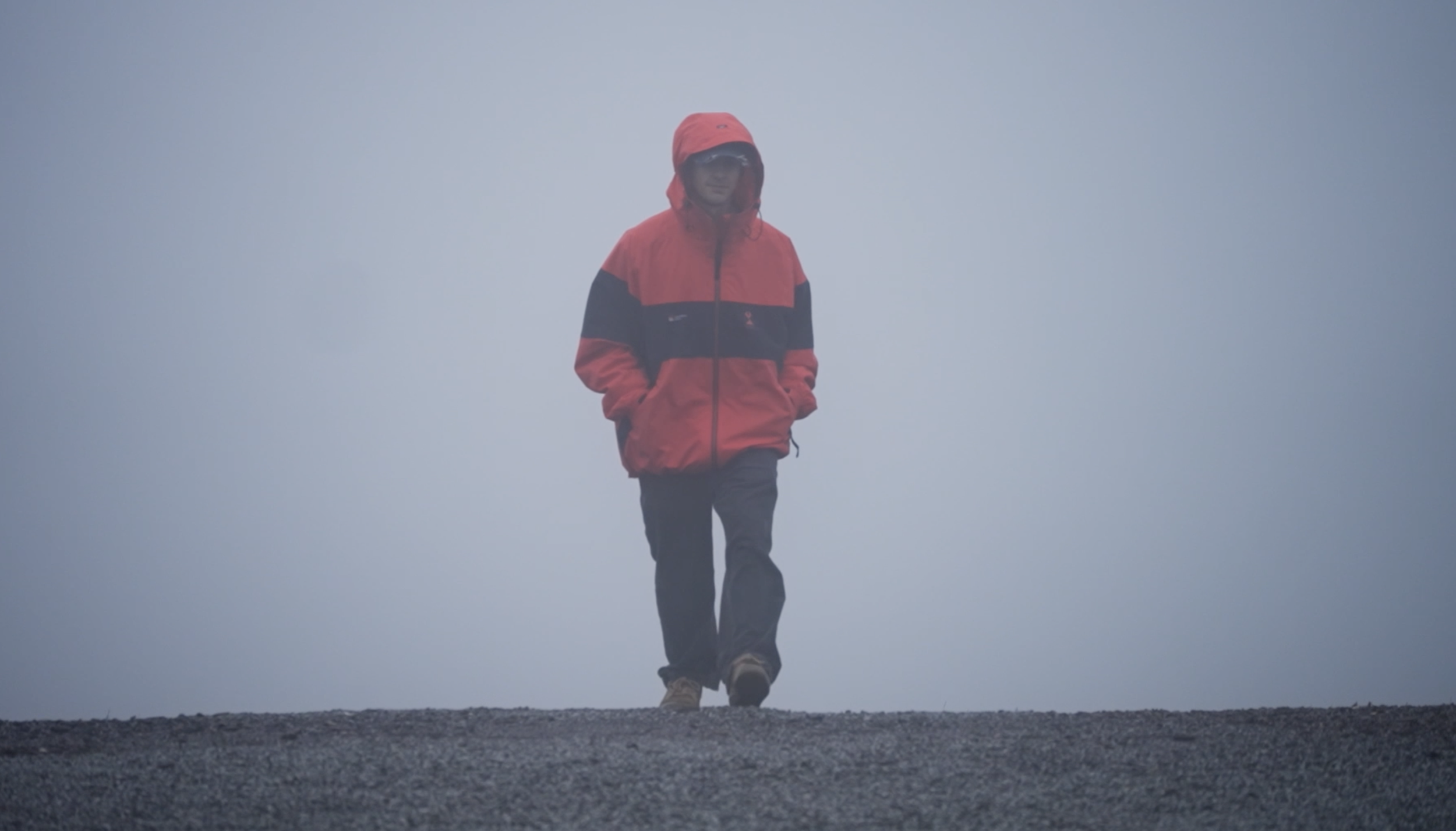
Tjäder - check. Stockholm - check. Fog - check (Paul Rhys/Olympic Channel)
The Swede whose rail tricks have broken records and gone viral talks about how he first combined filming and freeskiing as a child - and the mindset shift needed to channel his creativity towards the goal of another Olympic medal.
It’s the start of a several snowless winter months in Stockholm when Jesper Tjäder trudges up the city’s Hammarbybacken ski slope with me to film an interview for olympics.com.
The light drizzle, raw wind and gloomy outlook are a far cry from the pristine powder that frames the Swede’s viral social media videos.
We’re not going to get a repeat of his world’s longest rail grind here. But we are going to get some surprises.
Such as when one of the world’s coolest skiers drops a bombshell in the which-is-cooler-skiing-or-snowboarding debate.
“We’re always trying to be like snowboarders,” says Tjäder.
“I think snowboarding is still the cooler sport. When I was younger I wanted to be a snowboarder, but it didn't work out unfortunately.
“Skiing is good though,” he laughs.
How’s the freeski community going to react to him saying this? “I think everybody thinks the same. I still love skiing, it’s the best sport. But snowboarding is cooler. That’s just how it is.”
Tjäder knows cool.
Now at the grand old age of 31, he was at the forefront of a generation that started documenting their feats on skis well before social media took off.
Viral spirals
His dual identity as a creative filmmaker and skier took him eventually to viral fame – and a bronze medal in slopestyle at the Beijing 2022 Olympics.
“It was still on tape, for sure, the first video,” he says. “I borrowed my parents’ camera and just filmed outside in the backyard with my brother. Like, maybe we did a backflip or something on tiny plastic skis.
“We didn't know how to digitise the video. So we just had it on tape and figured it out later - how to get it on to the computer and make a video of it.”
Filming wasn’t just a way of showcasing his tricks. The advent of action cameras also meant a generation of young skiers could improve without having another set of eyes on them – something Tjäder continues to this day.
“You can just have the camera on your head and it's kind of been like my personal coach,” he says.
“When you ski, you're in the moment. You don't really think about some stuff but then you can go back to the to the head cam footage...you see where you looked during a trick or did I break before this jump even if I didn't think about it?”
Despite his online success – this trick has more than 500 thousand views and counting – Tjäder says he’s an “analogue” person. He’ll always be far more connected to the mountain and his friends than any smartphone or camera.
‘Super terrified'
The guy who does stuff like this also says he’s somewhat scared of heights.
“I like the rush I get from it, but I'm super terrified of stuff like that,” says Tjäder.
“Sometimes you're super scared. Trying new tricks is always scary.
“Just hitting a big jump...there's big risk involved, for sure. And I'm not really comfortable in the air.”
Tjäder is also not comfortable showing any kind of bravado about his achievements in the sport, racking his brains to list some of his astonishing career highlights.
“I guess I've done a lot of like, weird “world's first” tricks. Nothing really, like, super clear,” he says.
“I feel like I did the first switch triple frontflip. I think I did the first 1350 out of a rail.I think I currently hold the longest rail record, 156m.
“It was very organic for me growing up to to ski. It was part of the culture up to where I live.
“I was out on the slope having fun...I wasn't planning on becoming the greatest free skier or anything. I just wanted to be out there.”
With Milano Cortina 2026 coming up, Tjäder would love to go better than his bronze in Beijing. But for freeskiers, no matter how elite, any medal is a masterful showing in concentration.
They get months to master new tricks for socials. The Olympics is a whole different kind of pressure.
“The thing learned with the previous Olympics is just to play it smart. How risky do you want to get - competing in slopestyle especially?
“It's really tricky because there's a lot of tricks you think have consistently. But when there's six or more features in a slopestyle run, there's always going to be opportunities to mess up.
“A goal I had before Beijing was that I want to get a medal, but it's a big ask. So I was stoked to finally get it.
“So now I feel more relaxed coming into the next Olympics now in Milan. I don't feel as much of a pressure - which might help me with my nerves.”
Tjäder’s mindset has evolved since his first Games at Sochi, but some things don’t change at all.
“I'm doing the same thing now as I was doing when I was three years old, pretty much just going out, trying to have fun on the mountain,” he says.
“I really like the freeski community. It’s super nice and free. We're just having fun and that's what sport is all about.”